Check out J. McCollum's Welcome Back Video for his 3rd Grade Class

Showing posts with label In the Classroom. Show all posts
Showing posts with label In the Classroom. Show all posts
Monday, August 11, 2014
Wednesday, June 25, 2014
6th Grade Teacher, Karen Niegelsky, Wins Award

http://www.walden.com/blog/teachers-are-givers-week-3-winner-karen-niegelsky/
Tuesday, October 8, 2013
You've Been Blended!
Nadav Avital, our 5th Grade Composition and Humanities teacher, has been itching to create quick and professional looking videos that help students with their writing. Susan Gebhard, our Academic Dean, found PowToons yesterday and Mr. Avital has already embedded a video into his LMS for our kids. Check it out:
Friday, October 4, 2013
An Hour in the Life of the Middle School
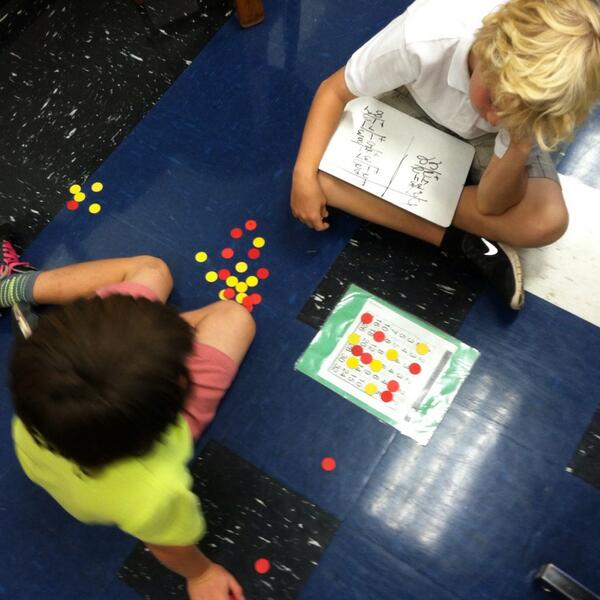
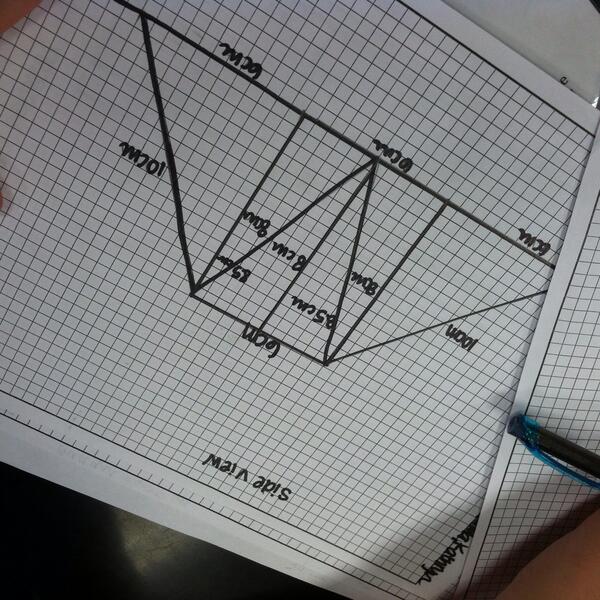
So I've started tweeting this year to showcase all the incredible teaching and learning that is happening at Canterbury School. Each day I try to get into classrooms and find some cool piece of education that is happening and do a quick tweet about it. I've found this to be an incredible way to not only to get into a bunch of classrooms, but also to document in real time the learning of our students. I primarily tweet pictures which has meant I can show objective benchmarks of what is happening in the middle school. Plus, people love to see what we're up to.
This morning, I was so proud of the work going on in Armfield that I sent out a flurry of tweets to showcase the kind of 21st century teaching and learning our middle vision demands. You can follow me on Twitter @MSDirectorSkeen. Below is the series of tweets from this morning. Enjoy!
5th grade read aloud of Holes by Louis Sachar. Critical piece of reading fluency. pic.twitter.com/a09q6CouOB



Thursday, January 10, 2013
Spirit Week Video
We are in the midst of Spirit Week here at Canterbury and the middle school has just completed "I survived the Mayan Apocalypse" Day. In celebration, the 5th grade made the following movie.
Tuesday, December 11, 2012
Wednesday, November 28, 2012
Old School Can Still Work

In 5th grade our writing curriculum steps up in terms of expectations and output. In Nadav Avital' (5th Grade Humanities and Composition) capable hands, however, students are guided step by step through a variety of different types of writing from research to personal narrative to expository and beyond. I was in his classroom this morning and was expecting some heavy techie work going on as they were discussing a writing strategy.
Instead, I found charts galore - fastened in all corners of the classroom - with examples, webs, highlights, and underlines to help the students as they wrote their own pieces. So, after an earlier post about how Google is enhancing the educational experience of our middle school students through the collaborative nature of its Apps, I wanted to take a moment to make sure everybody understood that the time-tested and effective pedagogical approaches are not being neglected in our classroom.
Friday, January 20, 2012
Game Changer
 |
| www.apple.com |
iBooks Author for the Mac
Tuesday, December 6, 2011
Lunar Eclipse
 |
| Jiyang Chen |
At the beginning of a lunar eclipse, the Earth’s shadow creeps across the bright face of the full moon, creating an area of darkness that increases gradually in size. Totality occurs when the Earth’s shadow covers the Moon’s face completely. This lasts at least a few minutes, although every eclipse is different. During totality, the Moon’s face appears to be a deep red. This is due to light rays from the outermost layers of the Sun that are bent and separated by the Earth’s atmosphere. Only the red wavelengths are bent in such a way that they reflect off the Moon’s surface. The rest of the wavelengths pass by the Moon and shine out into space.
The upcoming lunar eclipse will be visible from Greensboro as long as the weather is clear. From our point of view, the eclipse will not be a total one. The Moon will enter the Earth’s shadow around 6:32 am. The Moon sets at 7:17 am. During this time, a partial lunar eclipse will be visible.
As you are getting ready for the day, take a few minutes to step outside and take a look! If you have a Canterbury 8th grader, ask him or her to explain how a lunar eclipse is different from a solar eclipse. (In a solar eclipse, the Moon passes between the Earth and the Sun and casts its shadow on a tiny portion of the Earth’s surface. This occurs during the day when the Moon is new, and lasts only a few minutes.)
Erin Ringrose
7th and 8th Grade Science Teacher
Science Olympiad Coach
Tuesday, November 22, 2011
iPad Pilot Program 2012

iPad Pilot Summary
Monday, November 21, 2011
Just Wiki It

Karen Niegelsky, our 6th grade Humanities and 8th grade Composition teacher, has developed an intriguing 21st Century unit based around the principles of Heidi Hayes-Jacobs' Innovators' Challenge. She describes it below:
Students are usually cautioned about using Wikipedia as a source
for academic papers, but when doing “real world” research, many of us head to
this popular website to find information to everyday questions. Rather than
simply dismissing it as an unreliable resource for “real” research, Canterbury
eighth graders will spend the second trimester exploring its virtues and
producing their own contributions to an actual Wikipedia article.
Each eighth grader will choose a topic to research thoroughly
and then produce a Wikipedia-style article that is fluent, reliable, and
non-biased. In completing this project, students will gain experience in
writing for a real audience and in dealing with criticism and suggestions that
may come from readers other than fellow students or their teachers. Finally, they will get the thrill of
seeing their work online. (Their privacy is protected; Wikipedia authors are
anonymous.)
Students should be able to use much of their work to meet
the requirements of the Canterbury portfolio project including
· Develop a fundamental understanding of emerging ethical
issues and dilemmas regarding new media and technologies.
· Respond to an experience of
failure in a way that acknowledges that innovation involves small successes and
frequent mistakes.
Friday, November 11, 2011
Leadership: Traits and Skills
 |
| dvdtrainingvideo.com |
With this experience behind them, I challenge them to identify traits and skills that leaders need to be successful. Here is what they came up with:
Traits
- Calmness
- Engagement
- Understanding
- Honesty
- Integrity
Skills
- Identify strengths & weaknesses in the group
- Give precise encouragement
- Read people's characteristics
- Persuading through framing the task
- Delegate
- Identify the early adopters
- Communication - public speaking and honest communication
Wednesday, November 2, 2011
Creative Politics
I found this post from Daniel Pink's website and thought it was really funny:

And Cody Toone, who teaches at Cardston Elementary School in Alberta, sends this campaign poster from a grade six student election. I’m not sure the sign quite fits the definition of emotionally intelligent signage, but I am sure that Shelby has a future in politics:
Tuesday, October 4, 2011
21st Century Learning: Say Goodbye to the Book Report
 Growing up one of the first types of writing we learned was the book report. This was about as straightforward an assignment as there is:
- What is the title? Who is the author? When was it written? Who published it?
- Who are the main characters? What is an outline of the plot?
- Did you like it? Why or why not?
These were papers written for an audience of one: the teacher. Typically, the teacher would be looking to make sure you actually read the book and used proper grammar and sentence structure. Once handed back, the paper would go in the back of the binder, never to be seen again.
Well, the book report is no longer relevant in our world. In a period that is so enmeshed in social media and search terms, the more applicable piece of writing would be the book review. The more relevant venue would be a blog and a more interesting audience is your grade at school.
 Tony Carrick, Karen Niegelsky, and John Schoultz have devised a unit to do just that. Karen and Tony teach literature to our middle school students and were searching for a way to spice up the classic book report assignment which always used to accompany summer reading. They decided that a more relevant type of writing was the book review, but they still struggled with how they might broaden the audience.
This is where John Schoultz, our Technology Coordinator stepped in. Through our internal server, we have the ability to build wikis and blogs. Blogs allow students to create, as John calls it, a "virtual locker" which can be shared with their teachers and students alike. So, Tony and Karen worked with John to develop a unit that focused on the writing skills of a book review and the technological skills of managing and presenting a blog product. The book reviews appear in blog form and will be preserved in a review library for upcoming middle school students to view when they are choosing their independent reading books.
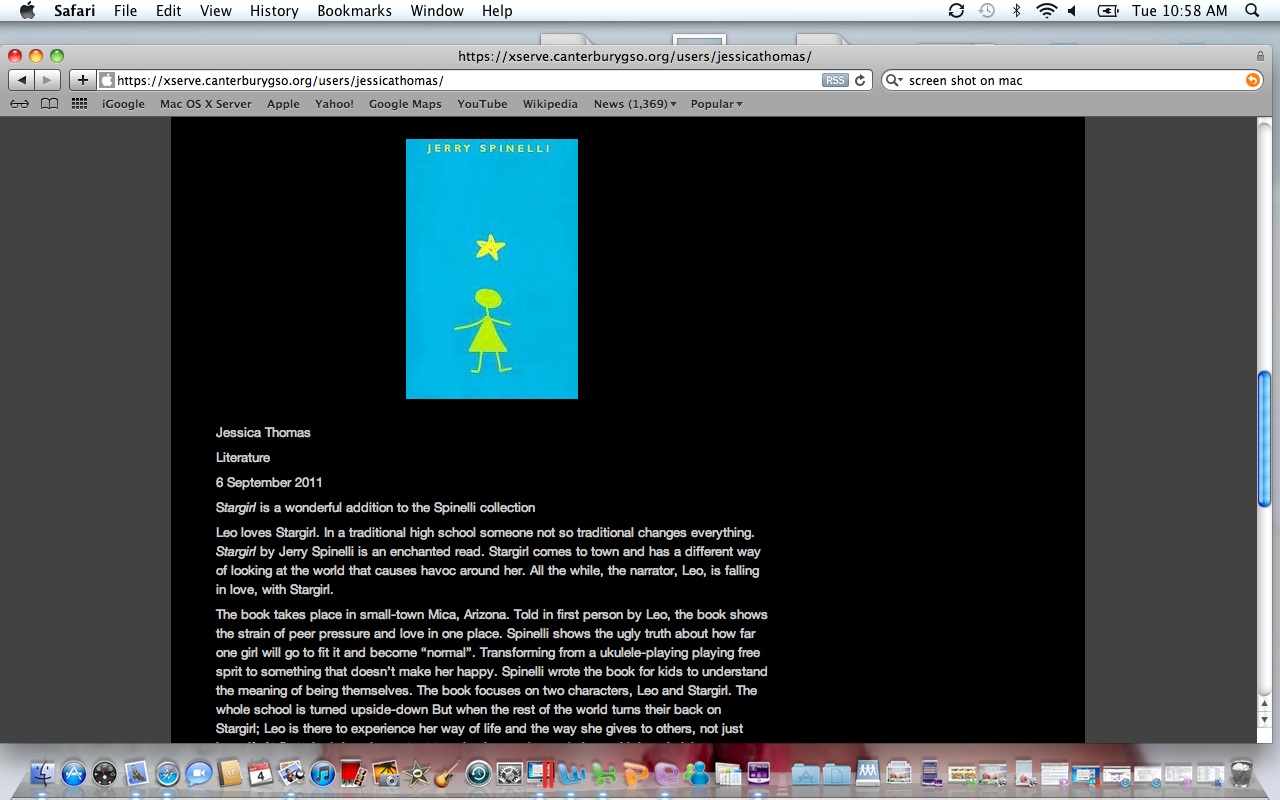
Students learned what distinguishes a good book review from a bad, how to determine a reviewers' bias, and the breakdown of a book review in terms of engaging the reader from the title through the plot summary to the analysis. On the technology side they learned to set up a blog, manage multiple subjects and labels, create and edit content, and incorporate multimedia into an otherwise wordy post (I'm sure your wishing I would audit this course and learn how to be more concise....)
By the end of this Book Review Unit, our students have begun to develop the following 21st Century Skills (based on a list from NAIS Trendbook 2010-2011):
- Analytical and Creative Thinking and Problem Solving
- Detect bias, and distinguish between reliable and unsound information.
- Control information overload
- Complex Communication - Oral and Written
- Write clearly and concisely - for a variety of audiences
- Explain information and compellingly persuade others of its implications
- Digital and Quantitative Literacy
- Understand, use, and apply digital technologies
- Create digital knowledge and media
- Use multimedia resources to communicate ideas effectively in a variety of formats

Throughout this post you have seen screen shots of those book reviews. We are excited for the type of learning we are creating in the middle school and what it means for our students in the future.
Wednesday, September 14, 2011
Curriculum Corner: 8th Grade Space Lesson

This day, however, Mrs. Ringrose, had assigned the students the task of molding this block of clay into the planets. The challenge was to create a solar system on a scale that matched the relative diameters and distances between each planet. Mrs. Ringrose describes the lesson below and check out the link to a slideshow of the students at work:
8th Grade Space Unit: Planet Creation

"We scaled down the size of the planets with play dough to put the planets in perspective to the human eye. - Walton
"We took 3 pounds of play dough and make all nine planets of the solar system. We had precise measurements that we had to follow to make sure all the planets were the right size." - Will
After we finished modeling the planets, we pulled up pictures of our models on the Smart Board and labeled the diameters of the planets in kilometers. Most of the students were surprised by the vast differences they saw.
"I learned that the Earth was over 100 times smaller than Jupiter and that seemed mind-blowing because our Earth seems so large." -Jessica
"I thought it was cool to compare Pluto to Jupiter" - Brad
"I learned that Earth is very small compared to other planets (ex. Jupiter, Saturn, Uranus). I realized that each person is like a grain of sand when compared to our whole galaxy." -Mary Grace
"Saturn and Jupiter were a lot bigger than I expected." - David
"Mars was smaller than Earth when I thought it was bigger or the same size." - James B
"I learned that Jupiter is so gigantic compared to everything else. I didn't realize that Earth was so small." - Sally
"Something interesting was that Neptune and Uranus were about the same model size." - Thomas
"The sizes ranged very far apart from about the size of a hand to the head of a pin." - Ross
Friday, September 2, 2011
Leadership Defined

I found it very interesting to see how their thoughts on leadership changed - even over the course of the forty minute class.
I had asked the class to identify any leaders as homework. We began today's class by outlining who those leaders were, what area they led in and how they led. We came up with an expansive list.
From this discussion I asked the students to write a definition for leadership. I collected the definitions and had the students write the words that stuck out to them about their peers' definitions. After looking over these words that stuck out to us, I asked the students to re-write their definitions of leadership. They all changed their definitions.
I found it interesting to see the difference between the original definitions and their new ones, once they had discussed as a group and heard the various perspectives of their classmates. I think they summed it up well when they said, "Defining leadership is hard." It is, but I am proud of the work the class put into discovering a definition that works for them. Below you will see the before and after definitions. What are your definitions of leadership?
Student One
Before: Leadership is someone who inspires others to help his cause.
After: Leadership is when someone helps their followers and others.
Student Two
Before: Leadership is the power to control or help people do things the way you do them.
After: Leadership is when you help people, inspire people, and get people to follow you.
Student Three
Before: A leader is someone to stand up to and a person to follow or save the day.
After: A leader inspires, follows, helps.
Student Four
Before: A leader is somebody who can make the people they lead believe in themselves.
After: A leader is someone who can inspire others and make them believe in him.
Student Five
Before: Leadership is when you are in charge and take care of your followers.
After: Leadership is when you inspire your followers and then control, help, stand up for, and save the day for them.
Student Six
Before: A leader is a person that can stand out and lead the group.
After: A leader is someone that can help and put themselves after their followers.
Brain Development and 21st Century Skill Development

Some highlights:
- The brain has plasticity. It grows and connections are strengthened and made more efficient with increased and varied approaches to the same material.
- The Prefontal Cortex houses the brain's higher order thinking neurons (as opposed to the amygdala, which is our basic fight or flight monitor). It is growing the most during our years in school.
- We need to stimulate the Prefrontal Cortex through differentiated information manipulation (say that 3 times fast...) in order to develop 21st Century skills in our students.
At Canterbury, we are working to enhance an already strong program to enable these approaches to instruction. Additionally, our teachers have undergone a significant amount of professional development, most recently in Developmental Designs Instructional Approaches, so that we are delivering lessons in a way that acknowledges the brain research of adolescents. It is anm integral part of our vision - Best Practices.
Throughout this year, you will see lessons featured on this blog which highlight the ways in which our students are developing 21st Century Skills. Stay tuned!
Here is the link to the article:
Dr. Judy Willis: Improving Executive Function in Students
UPDATE: I found this really cool 3D Interactive Brain website from HealthLink. You can scroll around the brain and find out about each part, where it is, and what it does. Check it out:
The Brain
Thursday, September 1, 2011
9-11 For Middle Schoolers
How do you engage a person in a memory of which they have no experience? How can you make a young person understand what 9-11 did to the American psyche? Our 8th graders were three when the planes hit the Twin Towers.
In a timely and poignant blog on Edutopia, Ben Johnson, begins this very conversation. For those of us in the Millenial Generation, 9-11 defines who we are, how we live, and the way the world operates. For those in generation that follows, it is something they've heard about and understand was a sad event.
How do you plan on commemorating 9-11 ten years later?
Here is the article: Ben Johnson: Why Students Have No Memory of September 11
Friday, August 26, 2011
Math Hats
Who said 8th graders are overly concerned with their self image? In Mrs. Allen's Math class, her 8th graders were more than happy to don their "Math Hats."


Wednesday, June 22, 2011
2011-2012 Preview: A 21st Century World Electives
As you may have seen in my most recent posts, I am previewing the new Electives Program in the middle school. We've created three academic tracks: The Arts, A 21st Century World, and Leadership. In each we offer a number of classes and today I'm previewing the classes in A 21st Century World track. This is meant to expose our students to the variety of themes they will encounter in their 21st Centruy world from sustainability practices (both environmental - Organic Gardening and financial - Personal Finance and Micro-Lending) to STEM skills to world languages.
 |
| howtogrowgardens.net |
Organic Gardening: Students in this elective learn the fundamentals of gardening the organic way, including basic concepts about soil, ground cover, weed and pest control, harmful and beneficial organisms, and composting. Students prepare and plant and enjoy the harvest of a seasonal garden in fall and spring.
 |
| http://answersaboutfamilyfinance.com/ |
Personal Finance: Financial freedom takes students one step closer to independence. In this class students learn tips and tricks for managing and growing wealth. In one semester, students will buy a car, write checks, balance their budget, and play in the stock market. They will have the opportunity to interact with featured business leaders and will participate in an online simulation to reinforce course objectives.
 |
| http://www.dugnorth.com/ |
Robotics: The Robotics elective asks students to become designers, computer programmers, problem solvers and engineers. Students are taught the basics of robot construction and programming and by the end of the course must solve complex problems with their Lego Mindstorm Robots. This challenging and fun elective introduces skills that will be needed in the 21st century.
 |
| http://www.ncais.org/ |
NCAIS On-Line Courses: This elective is presented in partnership with NCAIS Virtual schools and offers students an opportunity to enrich their curriculum through an extensive choice of on-line courses. From Mandarin to Forensic Science to Digital Photography, this elective can provide a student the opportunity to supplement their education. There is a fee for the course. Please see attached informational packet.
 |
| http://www.kiva.org/ |
Micro-Lending: The new micro-finance elective is a kiva.com specific economics class that seeks to answer the following questions: What is micro lending? Who receives micro loans? Why do they need it? Where are micro loans happening? The first few weeks consist of learning about loans and investing practices such as researching the area where they will find their businesses. The class will then be broken into "Venture Capitalist Teams," each of which have a Kiva loan portfolio. Every two weeks teams report out to the "board" to defend and refine their portfolio, review and analyze their returns, and discuss strategy.
 |
| http://kro21.k12.sd.us/ |
Science Olympiad: Science Olympiad is a track meet style science competition in which students compete in a range of STEM (science, technology, engineering, and mathematics) events. In class, students will refine science investigation skills while building towers, mousetrap cars, and bottle rockets, tracking the spread of infectious diseases, or investigating forensic evidence to solve mysteries. Students will learn to measure accurately using the metric system, express themselves in written and oral scientific language, and follow the steps of the scientific method.
Subscribe to:
Posts (Atom)