Showing posts with label MS Vision: Whole Child. Show all posts

Friday, November 13, 2015

The Gift of Failure: A Reading List for You

I've just completed chapter 2 in The Gift of Failure by Jessica Lahey. Throughout this chapter she summarizes the argument against overparenting and I found myself creating a mental reading list as I read. Then I realized, as every middle schooler at Canterbury already knows, that this list would, of course appear in her bibliography!

Some of these are well known, others less well known, but all worth the read. However, I will provide a list here on her references in the second chapter that I think will help provide color and context to her argument. Enjoy:


  1. Why We Do What We Do: Understanding Self-Motivation by Edward Deci, 1995
  2. Mindset: The New Psychology of Success by Carol Dweck, 2006
  3. Drive: The Surprising Truth about What Motivates Us by Daniel Pink, 2009
  4. Make It Stick: The Science of Successful Learning by Peter Brown, Henry Roediger III, and Mark McDaniel, 2014
Lahey also references studies by Elizabeth and Robert Bjork on "desirable difficulties" and Anne Sobel out of Northwester University in Qatar. 

PS I find it interesting that Deci's work was published 20 years ago and we are still struggling to manage our parental instincts and work towards developing our children's intrinsic motivation and autonomy....

Monday, November 9, 2015

BIG Question: What is the Power in a Name?

Each year in the middle school we embark on a series of BIG Questions around our community and what it means to be a part of it. Today we launched our first BIG Question to coincide with the national No Name Calling Week.

The question we posed to our middle schoolers was, "What is the Power in a Name?" This week and into next we will be undertaking a series of activities and reflection activities in our advisories that incorporate the expectations of kindness and inclusiveness we espouse at Canterbury. As part of this week we are encouraging students to wear crazy socks on Thursday, November 12. This is a small way to express our individuality and to see the individuality of others while continuing to think about our Big Question: What's the power in a name?

On Wednesday, November 18, Father Finnin will wrap up the BIG Question with a Middle School Chapel at 11:35 in Phillips Chapel.

Monday, October 26, 2015

The Gift of Failure: First Impressions

Good morning,

I've just completed the Introduction and Chapter 1 of The Gift of Failure by Jessica Lahey and my first impressions of what is to come are favorable. First and foremost, the author is not a lecturing, "How-could-you?" voice of condemnation. To the contrary, she employs a reassuring, "I'm-with-you" voice as she offers her own parenting approach up for us to understand the journey to raising self-sufficient children.

Ms. Lahey does a particularly masterful job of outlining the history of parenting in America from colonization through the present day in a manageable and entertaining 14 page first chapter. As a father of three, four and under (and a daughter who is 4 going on 16...), I was particularly drawn to her John Locke quotations. Here is one of those gems:

"Locke advises, 'crying is very often a striving for mastery and an open declaration of their insolence or obstinacy: when they have not the power to obtain their desire, they will by their clamor and sobbing maintain their title and right to it' (emphasis Locke's, and I can almost hear the derision dripping from those horrid, emotional words)."

Lahey goes on to outline the progression from parenting as a matter of survival to the helicopter/interventionist approach of today: "Today, parenting is less oxytocin-soaked rosy glow, more adrenaline-fueled oncoming headlight glare."

I recommend it heartily and if the above quotation offers anything, it should be an indication of the sensibility and humor with which Ms. Lahey approaches her subject matter.

Please enjoy!

Monday, December 15, 2014

A Christmas Sermon

The following is a guest post from one of our 8th graders, Clare. She gave her sermon this morning in Phillips Chapel in front of 400 or so of her closest friends and relatives. Each year, almost all of our 8th graders give a sermon offering their thoughts on life, spirituality, family, or school. A hallmark of the school, the 8th grade sermons have flourished under the leadership of Fr. Finnin, our school chaplain who has provided a more refined spiritual focus. 

Clare's sermon discussed how a Christmas Tree is a representation of life and that each and every one is an ornament that deserves a spot on that tree. Check it out: 

Good Morning.

For those who know me, know that I love Christmas. This is my favorite time of the year for so many different reasons. When I started thinking about my sermon, I knew that this would be the perfect time of the year. As I was remembering previous Christmas’, a certain story came to my mind.

A few years ago my family and I were decorating our Christmas tree. Everyone in my family had a particular job when decorating the tree. I was in charge of the red ornaments. As I was unloading the ornaments and placing them on the tree, I noticed one without a top and hook. Because there wasn’t a top and hook, I put it back into the box. After I was done with the rest of the ornaments, I looked back at what was left. The same red ornament was sitting alone at the bottom of it’s box. I realized that all I needed to do was to find a top and a hook, and that red ball could be on the tree like all the others. So I found a top, and I found a hook, and eventually that red ball fit perfectly on the Christmas tree.

You might be wondering how this has to do with you...me...Chapel…and just life. Well it has a lot. Imagine life as a big Christmas tree. A Christmas tree is big, green, fragrant, but there is something missing… the ornaments. And we are the ornaments of our Christmas tree. We come in different shapes, sizes, and color. And when we are on our Christmas tree, it is amazing!

As Perrin just read, "If the whole body were an eye, where would the hearing be? If the whole body were hearing, where would the sense of smell be?" Imagine a Chtmas tree with just green ornaments, or all circle shaped ornaments. That would be sort of boring wouldn't it? This also goes along with real life situations. It would be boring if there were only 8th graders on the planet, or only people who can sing, or only people who are really good at math. We all have our special talents and we need each other's help and gods help finding them.

Unfortunately, there are many people who don't think they belong on the tree. For whatever reason, they feel like they have lost their top or lost their hook, and don't belong with others on the Christmas tree of life. They don’t realize that they aren't alone. These people don’t know that God made the Christmas tree big enough for everyone. People shouldn’t make fun of someone’s scratch when they might be hiding a dent. Like what Matthew 7:1-5 states, "Why do you look at the speck of sawdust in your brother’s eye and pay no attention to the plank in your own eye?" This is talking about someone judging another person for a flaw, when that very same person has an even bigger flaw. This relates to my story because some people are not helping people find their hooks or their tops. Many people make fun of other people who have a difficulty or a clear difference, even though those same people have difficulties and struggles themselves.

Take a minute and think about a time that you felt like you didn't belong or someone made you feel like you were missing something or that you weren't like the other people. ......you have probably felt this sometime in your life if you have ever been to a new school and didn't know anyone, or you have been bullied for something you couldn't help. I have personal experience thinking that I didn’t have a hook or top and that I didn't exactly belong. I have had people insult me for being different or just because of having difficulties with different things. I used to think they were right and they might have been, but I didn't realize that they had differences too. I have always complained to my parents about myself having issues, but not other families or some of my friends. They always told me that you may not see their difficulties, but they have them.

I challenge you over this Christmas break, to see your differences in a good way and not to only see your differences, but to see your talents. And to make sure all your ornaments make it onto your Christmas tree. And remember, everyone has a top, a hook, and most of all, a place on God’s tree. Amen.

Saturday, November 8, 2014

What is that Canterbury Something?

In my role as Middle School Director, I am able to speak to various people who interact with Canterbury graduates. A common response near the beginning of our conversation is, “Oh! We know Canterbury kids when we see them. We can’t put our finger on it, but there is just something about them.”

Over the last four years, I’ve been trying to pinpoint what that “something” really is. I’ve come up with three distinguishing characteristics of Canterbury kids.

However, I think it is important to acknowledge that we start with incredible kids, who come from great and committed families, and whose backgrounds and experiences are vast in their diversity. This, I think, is a direct result of being an Episcopal school whose core purpose is to create a community where students are exposed to an array of people, perspectives, and ideas.

Now, to the characteristics. Because we are a small school, one in which our kids are known, cared for, and loved, we are able to develop a program that helps children become young men and women who

Advocate
Reflect, and
Lead

Starting from PK through 8th grade our students are learning to advocate for themselves and others. Whether it be including friends in a game on the playground, learning to use their words to express themselves in 1st grade, posing an hypothesis in science, or arguing about format in group work, learning to advocate for one’s self in their learning translates into positive action after Canterbury. Our kids aren’t afraid to tell you what they think and why they think what they do. That’s powerful.

Our students learn the power of reflection early on in Kindergarten carpet discussions and it continues from there to assignments like the ABC project in 4th grade and finally culminating in year long projects like the 8th Grade Portfolio and sermons. The sermons in particular are a fantastic manifestation of this characteristic of reflection in our students. Last year, 100% of our 8th grade class gave a sermon, which is an opportunity to discuss one’s spiritual journey in front of 400 of their closest friends! This skill of reflection - of what went well, what didn’t go well, what will I change the next time - not only helps to solidify a lifelong approach to learning, but further enhances in our students a sense of resiliency. Our kids will use their missteps, mistakes, and even failures to make themselves and those around them better.

This last point leads to the last skill our students develop - leadership. Canterbury students lead. Because of our K-8 structure, students who in some other situation at a K12 school wouldn’t be called upon to lead, now have a lot of opportunities to do just that. What further distinguishes our students, I think, is that through programs like our servant leadership classes, spiritual development and theology classes, and our sports teams, our students lead not for the glory, but because of a sense of duty. Add to this sense of duty a skillset comprised of advocacy and reflection and the orientation of Canterbury leaders is one of “How can I help?” What this means is that our students are “natural” leaders. Canterbury leaders seek out the needs of their community, reflect on how they can help, and work with others to serve those needs.

So, when 8th graders leave Canterbury and enter into their high school world and the greater Greensboro and Guilford County world that “something” people mention is their skill set at work. If everybody describes our kids this way, it means we’ve helped to develop the whole child who become incredible young men and women ready to make their world a better place. That’s powerful and shouldn’t that be every school’s endgame?

Wednesday, September 3, 2014

Back to the Future: Experience 21st Century Teaching and Learning on Back to School Night

"Marty! Do you realize what this means?"


This classic line from Doc Brown in “Back to the Future” is perhaps overused, but in this case it is both appropriate and a little scary considering this fact: In “Back to the Future 2,” Marty travels into the future to the year 2015. Let that marinate a little bit...


We're not using hover-boards as regularly, nor do we fly our cars in express lanes, so our new Back to School Night (BTSN) format won't include an explanation on how the flux capacitor works, but it will provide a glimpse into how your children are learning in the 21st century. What follows is a description of the reasons behind this format change, what you can expect in terms of your experiences, and the schedule for the night.


School is Different Today

School is different today and for all the right reasons:
  1. Brain-based research has provided a deeper understanding of how people learn, thus providing insights into effective teaching practices.
  2. Developmental understandings of adolescents has deepened as well, meaning learning shouldn't just be about the WHAT anymore. The world in which our children will find themselves will be one defined by change, and the skill sets needed for this world are not content based necessarily, but relationship based.
  3. Part of that change is the role of technology and how to leverage its power. We see this most powerfully as a means to connect, while balancing its use in order to develop those relationship skills that will be so essential.


Why Change the Format of Back to School Night?

It is important to have some context around the decision to move to a new BTSN format. Over the course of the last few years, I've noticed trends that, taken together, instigated this change.
  1. The information being shared at BTSN was of a very basic nature and was being shared electronically with the students and parents anyway, thus creating a redundancy in communication.
  2. As middle school students move up in grades, there has a been a correlating drop in parent attendance at BTSN.
  3. There has been a lot of change in the middle school over the last four years, and while I have strived to fully communicate it in my Parent Preview letters and other communication outlets, such as this blog, the benefit to your children is best communicated through your own experience.


But I Love the Nuts and Bolts...

We believe it is important to show you how different school really is, and a perfect time to do so is BTSN. However, we understand that many of you rely on BTSN for the nuts and bolts of a class: How can I reach the teacher? What will my child be learning? How will they be assessed on that learning? How much homework can we expect at home? In response, each teacher has created a video which outlines that information for you. The videos will be embedded in their Haiku page, which you will learn more about from John Schoultz. Below is an example of the type of video you might see on a class page.


So What's So Different, Then?

Three things are different about this BTSN. First, starting in Berry Hall, we will launch our new Haiku platform, the main mode of communication moving forward. John Schoultz, our Instructional Technology Coordinator, will outline the basics of logging in and navigating through Haiku. After his presentation, you will receive an email with your log-in credentials and links to video tutorials, so you can access the platform right away.


Second, you will hear from Kathryn Wolfson, our new Guidance Counselor, about the Top 5 Guiding Principles in teaching adolescents. She will explain why these principles are so important to how we shape the middle school experience at Canterbury, and give you a sense of why we teach your children the way we do.


Third, you will move to Armfield Hall and attend two mini-lessons in your child's grade. Your assigned classes are at this LINK. Each lesson will last about 25 minutes and you'll have the opportunity to both engage in the material and ask questions about the process. Obviously, technology is a critical piece of the experience, and you will certainly see how it is integrated into a lesson, but we won't ask you to bring an iPad or laptop. Instead, we will show how your child would incorporate technology into the lesson.


Now What?

We want BTSN to be a launching pad for our partnership in your child's learning. We hope that through this new experience, you will have a better understanding of the expectations we have for the students and feel better prepared to support your child as he or she grows in middle school. At Parent-Teacher Conferences on Sept. 30, you can meet with your child's teachers one-on-one to further deepen that partnership. Our goal is to keep you fully informed about what is going in your child's experience at Canterbury, what best practice in middle level education is, why we believe it is important to do the things we do, and how we go about implementing those priorities at Canterbury.


We are excited to welcome you Back to the Future to experience 21st century teaching and learning for yourself.


The Night's Schedule

Here is the night's schedule.  

  • 6:00 - 6:30: Ketner Science and Technology Building Tours (optional) led by Burns Jones, Head of School
  • 6:30 - 7:00: Berry Hall
    • Welcome from Burns Jones, Head of School
    • New Middle School Teacher Introductions, Burns Jones, Head of School
    • Annual Fund Introduction, Matt and Rhonda Wakefield, Parents '18 & '20
    • Haiku Introduction, John Schoultz, Instructional Technology Coordinator
    • Guiding Principles of Teaching Adolescents, Kathryn Wolfson, Counselor
  • 7:05 - 7:30: Mini-lesson Session 1
  • 7:35 - 8:00: Mini-lesson Session 2

Tuesday, August 19, 2014

The Future of Talent is Potential: HBR Podcast

http://www.gradweb.co.uk/
In this fascinating podcast from HBR.org, Linda Hill and Claudio Fernandez-Araoz, discuss how businesses are shifting away from core competencies their workers need, and towards identifying potential for workers to adapt to ever-shifting problems and tools. Specifically, Fernandez-Araoz identifies five characteristics that great employees will have:

  1. A fierce, passionate commitment to unselfish goals
  2. Curiosity
  3. Insight - holistic thinkers
  4. Engagement - a willingness to engage others in the pursuit of a common goal
  5. Determination and resilience
The premise of Canterbury is to develop all of these characteristics in our students across a myriad of experiences, so they can be the future talent in high school, college, and the workplace. 

You can see it in our servant leadership and leadership program. 

You can see it in our STEM program with its foundational problem based approach. 

You can see it in our social studies program through events like the Millenial Development Goals project, where curiosity is stoked. 

You can see it in our Episcopal identity. 

You can see it in our students. 

Monday, August 18, 2014

The Future is Here: Apple, IBM Form Business Apps Partnership

http://miapplesinteractive.blogspot.com
If you didn't think our kids need to know how to navigate in a mobile tech world, this announcement from Apple and IBM, should wake you up. The two tech rivals are going into business together to take advantage of each other's strengths and complete the transformation of the way work gets done. As they said in their joint statement:

The business enterprise partnership, announced after Tuesday's market's close, aims to "redefine the way work will get done, address key industry mobility challenges and spark true mobile-led business change,'' the companies said in a joint statement.
This is no joke. Our kids need to learn how to use these tools to make their lives more efficient and be ready to make their future businesses more efficient.

Apple, IBM  Form Business Apps Partnership 

Welcome to 5th Grade!

Below you will find the presentation and speaking notes from our 5th grade parent orientation this afternoon.


Thursday, August 14, 2014

Teen Girls and Harsh Realities of Online Popularity

http://weheartit.com/entry/group/2994788
This article from TIME focuses on a survey by the social network We Heart It, delves into the ways teen girls gauge popularity and how to work way into online popularity. Some of the more intriguing rules that the survey uncovered include: 

  1. Don’t serial post. (“You only want to post one Instagram a day.”)
  2. If you do post multiple things per day, they’d better be amazing. (“You can post multiple tweets a day, but they can’t be stupid or not interesting.”)
  3. If you game the system, don’t get caught. (“She [my friend] probably has 20 fake accounts where she goes and likes her own pictures.”)
Check out the article at the link below: 

Wednesday, August 13, 2014

The Scariest Words a Boy Can Hear

In this segment from NPR, Joe Ehrmann, the former Baltimore Colts defensive star and current high school football coach (at Gilman School in Baltimore, MD of which I am a proud graduate!) discusses how he learned to flip society's definition of being a man on its head. If you haven't heard him speak or read his book, Inside Out Coaching or the book about him by Jeffrey Marx called Season of Life: A Football Star, a Boy, a Journey to Manhood - you should.


The 3 Scariest Words A Boy Can Hear

Monday, August 11, 2014

Should I Be Good or Successful?

http://izquotes.com/
I heard this segment on NPR last month and felt it was something we should really be paying a lot of attention. The driving question: Do kids think their parents want them to be good or successful?

The premise of the story is that many of us as parents say we just want our children to grow up to be good people, but a Harvard study says otherwise. While we say we want them to be good people, we often send unspoken messages which rewards success. Here's a snippet:

If their daughter, Mila, 15, had to say whether her parents cared more about her being good to others or being successful, she says it'd be close, but she'd have to say "good," she hedges. 
Her brother, James, 13, however, doesn't hesitate. 
"Successful," he says. 
How does he know? Because achievement in school is what his parents nag him about, and reward him for, the most. For example, they let him quit volunteering at the soup kitchen when he didn't like it, but he gets no such pass on schoolwork. Similarly, Mila says, her parents got really happy and took her out to a nice restaurant for dinner to reward her for getting a B instead of a C. 
"It's one of those things people say, like, I really want you to be a good person, like that's my main thing," she says. "But deep inside, it's like, but I really want you to be successful."
 As a school we believe that the messages we should send to our students is that serving others through your gifts is success. This is the premise on which our Servant Leadership program is based. I highly recommend this article and let me know what you think!

For Most Kids, Nice Finishes Last


Welcome Back Video You Have to See!

Check out J. McCollum's Welcome Back Video for his 3rd Grade Class

Thursday, August 7, 2014

Let's Get Your Head Right: A Parent Primer Series

http://www.keepcalm-o-matic.co.uk/
Let's face it: school is about to start. As absurd as it may seem, students will be roaming the halls this month and I'm not sure any of us are ready for it! Summer is over! I have a friend whose favorite saying in times like these is to, "get your head right!" Well, it's time we kept calm and did just that.

In an effort to work our way back into school-mode and provide a context for WHY we do WHAT we do and HOW we do it, I thought a series of blog posts over the next few weeks might be helpful. I don't want to overload you, so this primer series, as I'm calling it will feature single articles, videos, or infographics with some editorial comments introducing them.

I've organized the posts to hopefully offer insights into the big questions surrounding middle level education. These questions fall into four broad categories including,

  1. Child Development
    • How are children growing up these days? 
    • What is their world like and how can we help? 
    • What should we be keeping in mind as we enter a new school year about how our kids are growing and interacting? 
  2. Innovation
    • What is happening in government/business/demographics that influence the world into which our children will enter?
    • How can we capitalize on innovations elsewhere and use them as learning tools in school? 
    • Are there principles from other industries that translate well into teaching and learning? 
  3. Curriculum and Program 
    • What are the best practices out there for middle level education? 
    • What is influencing our curriculum and program? 
    • How is Canterbury proactively positioning itself to develop students who will be leaders of the future? 
  4. Technology
    • How is Technology being used in education? 
    • What are the issues students, teachers, and parents face related to technology integration? 
    • How can we support students, teachers, and parents with technology?  
This series mirrors my summer on Twitter, which I can't promote enough as an incredible resource for anybody looking to delve deeply into the topics of the day. Almost all of these articles, video, or links were curated by people or institutions I follow on Twitter. If you follow me on Twitter @MSDirectorSkeen, you've likely seen me retweet many of these resources already. I will continue to post often on Twitter and for those pieces that deserve more in depth analysis, they will be coming to the blog. 

I hope you enjoy the rest of your summer and we'll see you soon!


Wednesday, May 14, 2014

The Powerful Effect of Unstructured Play

I found this article on Twitter and it is a great reminder that unstructured play is essential for healthy development.

  • Let them struggle with the rules, 
  • let them argue "fairness,"
  • let them build forts and skin knees,
  • let them dam streams, and
  • let them relax. 

Monday, May 5, 2014

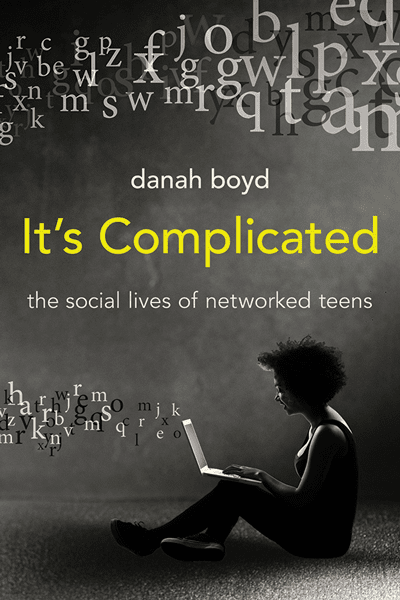
It's Complicated: A Book Review

This book review was originally posted on the SAIS website on 5/1/2014.

Teens & Social Media: It’s Complicated
A review of danah boyd’s new book, It’s Complicated: The Social Lives of Networked Teens
By David Skeen

Once upon a time in a land far, far away young people lived idyllic lives. Teenagers, as they were called, always - always - obeyed their parents. They would sit enthralled at the knees of their mothers and fathers, soaking up the hard-earned wisdom of these adults. Teens would tell their parents everything that was happening in their lives from the moment they woke up to the time they went to bed - at a reasonable hour, of course. Teens knew they needed their sleep and got plenty of it.  Teen years were happy, simple and easy.

One day an evil sorcerer named Internet arrived in the kingdom. Internet and his minions, MySpace, Facebook, Snapchat, Instagram, YouTube, and Twitter (collectively known as “Social Media”) enticed and lured teenagers to share their lives and ideas. As Internet’s insidious relationship with the youth of the kingdom took hold, teenagers grew moody, often shunning time with their parents so they could “hang out” with their friends. Parents knew very little about what was happening in their lives and were worried their children were not getting enough sleep. Most concerning of all, teens were pushing boundaries with their parents and searching for - gasp - their own identities.

In her new book, It’s Complicated: The Social Lives of Networked Teens, danah boyd (she does not capitalize her name) debunks the above fairy tale and brings us back to reality regarding “the anxieties that many American adults have about teens’ engagement with social media” (p. 5). Through ten years of study, 166 interviews with teens around the country, work at Berkeley, Harvard, and NYU (the twenty-one page bibliography is a testament to the depth of research), as well as her day job as Principal Researcher at Microsoft Research, danah boyd has written a book that is an essential read for educators and parents.

boyd’s premise begins with the idea that teen issues today are the same as they have always been.  Despite what she finds as a common desire by teens to hang out in person a combination of society’s fear and anxiety around our children, reduction in access to interpersonal settings such as the mall or the park and overscheduling force teens to flock to social media to do what teens do: socialize. These new “networked publics,” as boyd calls them, provide teenagers with what they’ve always wanted - opportunities to connect “with other people and have the freedom of mobility.” (p. 10)

The internet is neither good nor bad and social media is neither good nor bad. Both, however, are here to stay. Social media will not, as boyd outlines, usher in a utopia or destroy society but instead will act as a “reflection of our society and that mirror is going to be reflecting what we see. If we do not like what we see in that mirror the problem is not to fix the mirror, we have to fix society” (p. 212).  With this tenet in mind, boyd delves into seven topics related to teens and their networked world: identity, privacy, addiction, danger, bullying, inequality and literacy. Throughout each chapter, boyd maintains a narrative that is grounded in sociology rather than technology. Her findings are revealing. Some of the most intriguing include,

  • Teens today are “public by default and private through effort.” (p. 61)
  • Teens aren’t necessarily addicted to social media, but rather, as has long been the case, addicted to each other. (p. 80)
  • With the introduction of social media, like Elvis, comic books, and TV before it, parental anxieties are regenerated and the medium of the cultural shift becomes the target of a “moral panic.” (p. 105)
  • Teen friending patterns on social media consistently reinforced existing social divisions. (p. 165)
  • Digital Native vs. Digital Immigrant is a false precept. It abdicates our responsibility to teach our kids digital and media literacy. (p.180)

boyd’s voice of reason and research driven narrative provides a straightforward framework for conversations with teenagers. It’s Complicated should be required reading for all educators and parents in order to better understand this new(ish) platform of social media and its impact on our world. The good news is, as boyd herself states, while the names of Internet’s minions may change, the underlying story remains the same. Lessons learned from this book are enduring.

For most independent school educators, this work probably confirms a lot of what we have intuited about teen life and, therefore, offers a bridge for conversation with anxious parents. For parents, the book provides a calming voice. One who has an intimate knowledge of teenagers is saying quite clearly, “Our children’s world may be more complicated than we ever imagined but, by and large, they are going to be OK.”

Wednesday, April 23, 2014

Parentology by Dalton Conley

I came across a couple of book reviews of this book, Parentology by Dalton Conley, and thought it seemed like a thought-provoking read. I will be putting it on my summer reading list.

Thursday, March 20, 2014

A Tribute to Kathy Durham

I received this email tonight and couldn't contain myself. I needed all of you who read this blog to see it, because I think it goes straight to the heart of the kind of person Kathy is and she never asks for praise. Well - she's gets it here and well deserved. KD is a superstar and we are so lucky to have her!

Kathy manages all of our high school placement for our 8th graders and does an incredible job of it. Take a look:

Mr. Skeen,

I just wanted to give a shout out to Mrs. Durham.  Not only has she shown endless patience with my son, she has helped us so much throughout this school year.  She worked it out so that we could get periodic updates on his behavioral and academic progress before reports. 

She has also provided him with a quiet place to study after school when he has sports.  Since she has implemented these measures his grades and his reported conduct in class has improved.  We really appreciate it.

Also, I wanted to commend her on helping parents with the transition to high school.  I had been through the process with my oldest son and even though he was going from one public school into a feeder public school, no one helped us with the process. I had to take off several days from work to get the paperwork done.  He was provided incorrect advice from counselors and the entire process was stressful for all.  

In contrast, Ms. Durham made it so easy to navigate.  Her help with the IB applications was amazing.  The fact that she made sure they were delivered on time was really just incredible.  When my husband told the IB coordinator that at Grimsley she couldn't believe that there was a school that actually did that for the students. 

This week, we received my son's registration packet for high school.  Again, I couldn't believe how well done it was and how all the information and recommendations had already been compiled.  I had planned to take off tomorrow and try to put the information together for our registration meeting next week.  I am just simply overwhelmed by this.

I have really appreciated her hard work and support of my son and our family this year.

Best regards,
 

A Visual for the Growth Mindset

This is a great infographic on the Growth Mindset.


Thursday, March 13, 2014

Addressing the Whole Child via Technology (Maslow's Hierarchy)

I found this article (and infographic) via Dr. Jackie Gerstein about how Maslow's Hierarchy of needs can be addressed with technology and thought it was an interesting take on the whole child - something that is fundamental to us at Canterbury.

Addressing Maslow's Hierarchy of Needs with Technology