Showing posts with label MS Vision: Best Practices. Show all posts

Friday, December 5, 2014

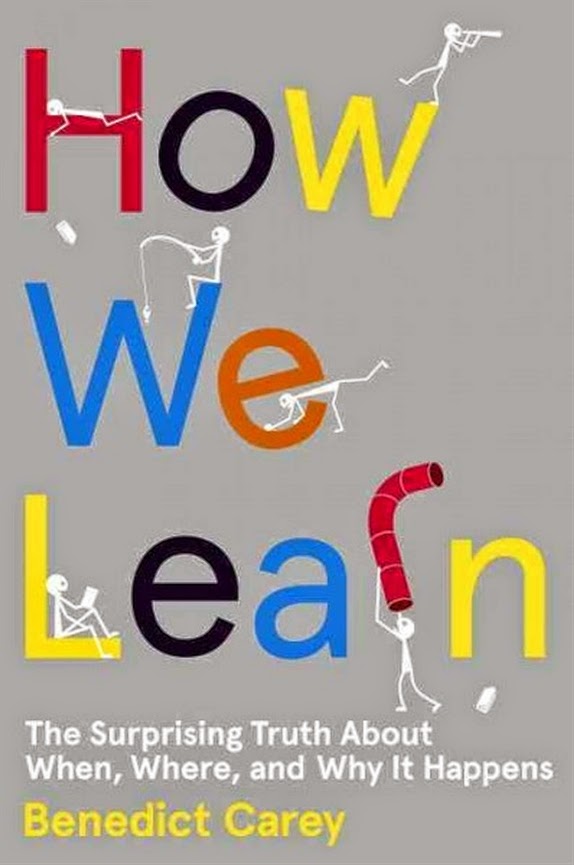
How We Learn: The Surprising Truth About When, Where, and Why It Happens

This book review originally appeared as part of the December 4 SAIS eNewsletter

If you were to put the major influences on how our brains developed in terms of shaping the way we learn onto a timeline, the first million-or-so years would consist of two main contributors: the search for food and the unending desire to survive. It is only in the last few thousand years that more ephemeral influences have begun to impact the way our brains adapt for learning. It is only in the last few hundred years that we as a species have put an edifice of education of our own creation around what we perceive to be the way we learn. 

The problem with this, says Benedict Carey, a New York Times science reporter and author of the book, How We Learn: The Surprising Truth About When, Where, and Why It Happens, is that this artifice of education often ignores all of the ways the brain really learns. What we’ve been taught about studying, practicing, and solving limits our ability to make learning last. Carey offers concrete strategies to capitalize on the first million years of brain development - that which made us hyper-aware of our surroundings, intent on finishing a project because of the need to accomplish a goal, or perceiving multiple factors at once to inform our next move. He accomplishes this by offering up a plethora of meta-research, experiments, personal anecdotes, and even puzzles to bring his points home. In fact, this is one of the more appealing aspects of the book - if you are looking for a relatively concise compilation of major research on the brain, memory, forgetting, and learning, How We Learn is an excellent resource. 


How We Learn, through Carey’s organization of the research, provides for the layperson an accessible and comprehensive account of the science behind learning. He divides his narrative into four main parts. In part one, he brings everyone up to speed on the biology of learning and the role that forgetting plays in how we learn. A little forgetting is good because it means you work the memory muscle when you need to recall something. Part two focuses on the retention of knowledge and builds on the memory theme by delving into the relationship of learning in different contexts to aid in retrieval of information, spaced learning or knowing when to start studying, and self examination as an active means of study. Part three discusses the best way to solve more complex problems and it is in this section of the book, where Carey’s best work lies. He does a masterful job of articulating the steps involved in the “Insight Experience” (p. 114), the power of percolation around a problem, and “interleaving” or mixed-up practice (p. 171). Finally, part four introduces the intriguing realm of perceptual learning modules as a means to “supplement experience” (p. 186) and dutifully outlines the importance of sleep in consolidating learning across modes, physical and/or mental. 


While Carey does an excellent job compiling interesting studies and organizing research on learning into categories that make sense, the outcomes of that research and how he proposes we use them practically are not really new news. For example, Carey’s insight about spacing study sessions over multiple days to make your mind work harder to recall information is, essentially, our teachers’ admonition to study a little at a time. His advice about taking a break and distracting yourself when stumped on a problem in order to capture that a-ha! moment when you return to work is essentially like taking a coffee break in the faculty room. His point about using multiple choice testing to force the brain to eliminate bad choices and “tune it” towards the right one is essentially every high school junior’s primary strategy going into the SAT. This is not to say these are not important points to keep in mind and understand as teachers, because they are. But for the most part, educators who are focused on best practices, research, and influential trends on education will not find any groundbreaking ideas in this book. However, it could be a great resource for new teachers, inquisitive and committed parents, and students who, in Carey’s words, may need to “broaden the margins” (p. xi) and give themselves a break every once in a while. 


Wednesday, September 3, 2014

Back to the Future: Experience 21st Century Teaching and Learning on Back to School Night

"Marty! Do you realize what this means?"


This classic line from Doc Brown in “Back to the Future” is perhaps overused, but in this case it is both appropriate and a little scary considering this fact: In “Back to the Future 2,” Marty travels into the future to the year 2015. Let that marinate a little bit...


We're not using hover-boards as regularly, nor do we fly our cars in express lanes, so our new Back to School Night (BTSN) format won't include an explanation on how the flux capacitor works, but it will provide a glimpse into how your children are learning in the 21st century. What follows is a description of the reasons behind this format change, what you can expect in terms of your experiences, and the schedule for the night.


School is Different Today

School is different today and for all the right reasons:
  1. Brain-based research has provided a deeper understanding of how people learn, thus providing insights into effective teaching practices.
  2. Developmental understandings of adolescents has deepened as well, meaning learning shouldn't just be about the WHAT anymore. The world in which our children will find themselves will be one defined by change, and the skill sets needed for this world are not content based necessarily, but relationship based.
  3. Part of that change is the role of technology and how to leverage its power. We see this most powerfully as a means to connect, while balancing its use in order to develop those relationship skills that will be so essential.


Why Change the Format of Back to School Night?

It is important to have some context around the decision to move to a new BTSN format. Over the course of the last few years, I've noticed trends that, taken together, instigated this change.
  1. The information being shared at BTSN was of a very basic nature and was being shared electronically with the students and parents anyway, thus creating a redundancy in communication.
  2. As middle school students move up in grades, there has a been a correlating drop in parent attendance at BTSN.
  3. There has been a lot of change in the middle school over the last four years, and while I have strived to fully communicate it in my Parent Preview letters and other communication outlets, such as this blog, the benefit to your children is best communicated through your own experience.


But I Love the Nuts and Bolts...

We believe it is important to show you how different school really is, and a perfect time to do so is BTSN. However, we understand that many of you rely on BTSN for the nuts and bolts of a class: How can I reach the teacher? What will my child be learning? How will they be assessed on that learning? How much homework can we expect at home? In response, each teacher has created a video which outlines that information for you. The videos will be embedded in their Haiku page, which you will learn more about from John Schoultz. Below is an example of the type of video you might see on a class page.


So What's So Different, Then?

Three things are different about this BTSN. First, starting in Berry Hall, we will launch our new Haiku platform, the main mode of communication moving forward. John Schoultz, our Instructional Technology Coordinator, will outline the basics of logging in and navigating through Haiku. After his presentation, you will receive an email with your log-in credentials and links to video tutorials, so you can access the platform right away.


Second, you will hear from Kathryn Wolfson, our new Guidance Counselor, about the Top 5 Guiding Principles in teaching adolescents. She will explain why these principles are so important to how we shape the middle school experience at Canterbury, and give you a sense of why we teach your children the way we do.


Third, you will move to Armfield Hall and attend two mini-lessons in your child's grade. Your assigned classes are at this LINK. Each lesson will last about 25 minutes and you'll have the opportunity to both engage in the material and ask questions about the process. Obviously, technology is a critical piece of the experience, and you will certainly see how it is integrated into a lesson, but we won't ask you to bring an iPad or laptop. Instead, we will show how your child would incorporate technology into the lesson.


Now What?

We want BTSN to be a launching pad for our partnership in your child's learning. We hope that through this new experience, you will have a better understanding of the expectations we have for the students and feel better prepared to support your child as he or she grows in middle school. At Parent-Teacher Conferences on Sept. 30, you can meet with your child's teachers one-on-one to further deepen that partnership. Our goal is to keep you fully informed about what is going in your child's experience at Canterbury, what best practice in middle level education is, why we believe it is important to do the things we do, and how we go about implementing those priorities at Canterbury.


We are excited to welcome you Back to the Future to experience 21st century teaching and learning for yourself.


The Night's Schedule

Here is the night's schedule.  

  • 6:00 - 6:30: Ketner Science and Technology Building Tours (optional) led by Burns Jones, Head of School
  • 6:30 - 7:00: Berry Hall
    • Welcome from Burns Jones, Head of School
    • New Middle School Teacher Introductions, Burns Jones, Head of School
    • Annual Fund Introduction, Matt and Rhonda Wakefield, Parents '18 & '20
    • Haiku Introduction, John Schoultz, Instructional Technology Coordinator
    • Guiding Principles of Teaching Adolescents, Kathryn Wolfson, Counselor
  • 7:05 - 7:30: Mini-lesson Session 1
  • 7:35 - 8:00: Mini-lesson Session 2

Tuesday, August 19, 2014

The Future of Talent is Potential: HBR Podcast

http://www.gradweb.co.uk/
In this fascinating podcast from HBR.org, Linda Hill and Claudio Fernandez-Araoz, discuss how businesses are shifting away from core competencies their workers need, and towards identifying potential for workers to adapt to ever-shifting problems and tools. Specifically, Fernandez-Araoz identifies five characteristics that great employees will have:

  1. A fierce, passionate commitment to unselfish goals
  2. Curiosity
  3. Insight - holistic thinkers
  4. Engagement - a willingness to engage others in the pursuit of a common goal
  5. Determination and resilience
The premise of Canterbury is to develop all of these characteristics in our students across a myriad of experiences, so they can be the future talent in high school, college, and the workplace. 

You can see it in our servant leadership and leadership program. 

You can see it in our STEM program with its foundational problem based approach. 

You can see it in our social studies program through events like the Millenial Development Goals project, where curiosity is stoked. 

You can see it in our Episcopal identity. 

You can see it in our students. 

Monday, August 18, 2014

Friday, August 15, 2014

Creating Legacy Work: Innovation in Schools via Alan November


Paul Kostak, our 5th and 6th Grade Science teacher, and John Schoultz, our EdTech Coordinator, went to the ISTE Conference this summer and heard Alan November speak about the future of education. They put me onto this TED talk, which outlines Alan's story and how the "future" of education has always been here, it just needs to adapt to the tools of the era. The principles of best practice teaching and learning don't change. Enjoy.

Tuesday, August 12, 2014

5 Brain Facts That Influence How People Learn

http://www.dashe.com/blog/learning/five-brain-facts-learn/
This is a concise and helpful article on how the brain works when it comes to learning.

5 Brain Facts That Influence How People Learn

Thursday, August 7, 2014

Let's Get Your Head Right: A Parent Primer Series

http://www.keepcalm-o-matic.co.uk/
Let's face it: school is about to start. As absurd as it may seem, students will be roaming the halls this month and I'm not sure any of us are ready for it! Summer is over! I have a friend whose favorite saying in times like these is to, "get your head right!" Well, it's time we kept calm and did just that.

In an effort to work our way back into school-mode and provide a context for WHY we do WHAT we do and HOW we do it, I thought a series of blog posts over the next few weeks might be helpful. I don't want to overload you, so this primer series, as I'm calling it will feature single articles, videos, or infographics with some editorial comments introducing them.

I've organized the posts to hopefully offer insights into the big questions surrounding middle level education. These questions fall into four broad categories including,

  1. Child Development
    • How are children growing up these days? 
    • What is their world like and how can we help? 
    • What should we be keeping in mind as we enter a new school year about how our kids are growing and interacting? 
  2. Innovation
    • What is happening in government/business/demographics that influence the world into which our children will enter?
    • How can we capitalize on innovations elsewhere and use them as learning tools in school? 
    • Are there principles from other industries that translate well into teaching and learning? 
  3. Curriculum and Program 
    • What are the best practices out there for middle level education? 
    • What is influencing our curriculum and program? 
    • How is Canterbury proactively positioning itself to develop students who will be leaders of the future? 
  4. Technology
    • How is Technology being used in education? 
    • What are the issues students, teachers, and parents face related to technology integration? 
    • How can we support students, teachers, and parents with technology?  
This series mirrors my summer on Twitter, which I can't promote enough as an incredible resource for anybody looking to delve deeply into the topics of the day. Almost all of these articles, video, or links were curated by people or institutions I follow on Twitter. If you follow me on Twitter @MSDirectorSkeen, you've likely seen me retweet many of these resources already. I will continue to post often on Twitter and for those pieces that deserve more in depth analysis, they will be coming to the blog. 

I hope you enjoy the rest of your summer and we'll see you soon!


Wednesday, June 25, 2014

6th Grade Teacher, Karen Niegelsky, Wins Award

Karen Niegelsky, our 6th grade Humanities and Composition teacher has won the Walden Media's contest, Teachers are Givers. Her unit on community and dystopia as seen through The Giver won the award. You can check out her lesson and accolades at the link below:

http://www.walden.com/blog/teachers-are-givers-week-3-winner-karen-niegelsky/

Monday, May 5, 2014

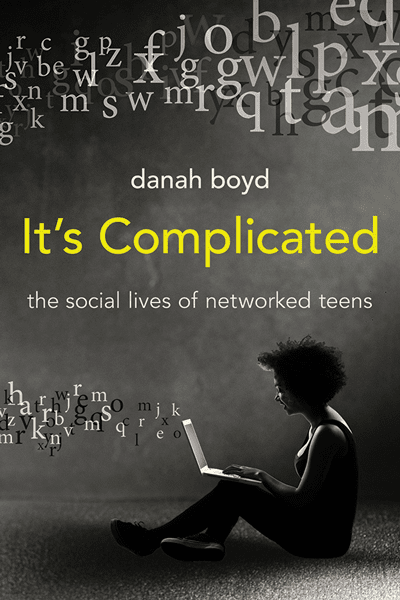
It's Complicated: A Book Review

This book review was originally posted on the SAIS website on 5/1/2014.

Teens & Social Media: It’s Complicated
A review of danah boyd’s new book, It’s Complicated: The Social Lives of Networked Teens
By David Skeen

Once upon a time in a land far, far away young people lived idyllic lives. Teenagers, as they were called, always - always - obeyed their parents. They would sit enthralled at the knees of their mothers and fathers, soaking up the hard-earned wisdom of these adults. Teens would tell their parents everything that was happening in their lives from the moment they woke up to the time they went to bed - at a reasonable hour, of course. Teens knew they needed their sleep and got plenty of it.  Teen years were happy, simple and easy.

One day an evil sorcerer named Internet arrived in the kingdom. Internet and his minions, MySpace, Facebook, Snapchat, Instagram, YouTube, and Twitter (collectively known as “Social Media”) enticed and lured teenagers to share their lives and ideas. As Internet’s insidious relationship with the youth of the kingdom took hold, teenagers grew moody, often shunning time with their parents so they could “hang out” with their friends. Parents knew very little about what was happening in their lives and were worried their children were not getting enough sleep. Most concerning of all, teens were pushing boundaries with their parents and searching for - gasp - their own identities.

In her new book, It’s Complicated: The Social Lives of Networked Teens, danah boyd (she does not capitalize her name) debunks the above fairy tale and brings us back to reality regarding “the anxieties that many American adults have about teens’ engagement with social media” (p. 5). Through ten years of study, 166 interviews with teens around the country, work at Berkeley, Harvard, and NYU (the twenty-one page bibliography is a testament to the depth of research), as well as her day job as Principal Researcher at Microsoft Research, danah boyd has written a book that is an essential read for educators and parents.

boyd’s premise begins with the idea that teen issues today are the same as they have always been.  Despite what she finds as a common desire by teens to hang out in person a combination of society’s fear and anxiety around our children, reduction in access to interpersonal settings such as the mall or the park and overscheduling force teens to flock to social media to do what teens do: socialize. These new “networked publics,” as boyd calls them, provide teenagers with what they’ve always wanted - opportunities to connect “with other people and have the freedom of mobility.” (p. 10)

The internet is neither good nor bad and social media is neither good nor bad. Both, however, are here to stay. Social media will not, as boyd outlines, usher in a utopia or destroy society but instead will act as a “reflection of our society and that mirror is going to be reflecting what we see. If we do not like what we see in that mirror the problem is not to fix the mirror, we have to fix society” (p. 212).  With this tenet in mind, boyd delves into seven topics related to teens and their networked world: identity, privacy, addiction, danger, bullying, inequality and literacy. Throughout each chapter, boyd maintains a narrative that is grounded in sociology rather than technology. Her findings are revealing. Some of the most intriguing include,

  • Teens today are “public by default and private through effort.” (p. 61)
  • Teens aren’t necessarily addicted to social media, but rather, as has long been the case, addicted to each other. (p. 80)
  • With the introduction of social media, like Elvis, comic books, and TV before it, parental anxieties are regenerated and the medium of the cultural shift becomes the target of a “moral panic.” (p. 105)
  • Teen friending patterns on social media consistently reinforced existing social divisions. (p. 165)
  • Digital Native vs. Digital Immigrant is a false precept. It abdicates our responsibility to teach our kids digital and media literacy. (p.180)

boyd’s voice of reason and research driven narrative provides a straightforward framework for conversations with teenagers. It’s Complicated should be required reading for all educators and parents in order to better understand this new(ish) platform of social media and its impact on our world. The good news is, as boyd herself states, while the names of Internet’s minions may change, the underlying story remains the same. Lessons learned from this book are enduring.

For most independent school educators, this work probably confirms a lot of what we have intuited about teen life and, therefore, offers a bridge for conversation with anxious parents. For parents, the book provides a calming voice. One who has an intimate knowledge of teenagers is saying quite clearly, “Our children’s world may be more complicated than we ever imagined but, by and large, they are going to be OK.”

Wednesday, March 26, 2014

Nanoscience is Really Cool


"...has been established as an academic collaboration between North Carolina Agricultural and Technical State University and The University of North Carolina at Greensboro. Both Universities are classified by the Carnegie Foundation as “research universities with high research activity.” JSNN builds on the strengths of the two universities in the basic sciences and in engineering to offer an innovative, cross-disciplinary graduate program that will train scientists in various emerging areas of nanoscience and nanoengineering."

We visited with the Nanoscience Department Chair, Dr. Daniel Herr (check out his TED talk) and were treated to an incredible tour of the facility. I've embedded the images we saw on the walls of the facility that came from the Helium Ion Microscope at JSNN and thought you would enjoy them.


Wednesday, February 12, 2014

7th Grade Leadership at Work


Students from Canterbury School's 7th Grade Servant Leadership class, have made a video to help raise awareness and money for McNair Elementary. You, too, can help raise money for the children of McNair Elementary School for supplies and other things that the children need. Please watch our video on YouTube. The comment section has information about how to donaten or go directly to our fundraising page: https://www.piggybackr.com/mason_powell/mcnair-elementary-school-help-the-children-of-mcnair-fundraiser

Monday, February 10, 2014

In My Neighbors' Shoes

http://jelia.wordpress.com/
On February 19 we will begin the In My Neighbors’ Shoes experiences which involves grade level service learning trips that focus on building understanding and empathy for our neighbors in Greensboro. 

The 5th grade will have the opportunity to engage with and learn from students at Haynes-Inman Education Center, a school that serves students with severe to profound cognitive and/or physical disabilities. 

The 6th grade will be focusing on interfaith understanding, as part of their Theology studies of the Abrahamic faiths. They will be visiting the Islamic Center of Greensboro and the Beth David Synagogue. 

The 7th grade will focus on their work with the Millennium Development Goals in Social Studies and learn about water quality and sanitation at the Townsend Water Treatment Plant and the immigrant experience at Faith Action International House. 

The 8th grade will be going on a series of small group trips that emulate the experience of the working poor in Greensboro.  These groups will be navigating the public transportation system, shopping for groceries, navigating the court system, and a will be taking a basic tour of the correction center.

We have created a website that you can follow for up-to-the-minute updates and resources as we prepare, engage, and reflect on the experiences of our neighbors. Check it out at


You can also follow the experience on Twitter @CburyServLearn. If you have any questions or you want to be a part of it all, please do not hesitate to contact me at 336-288-2007 x 131 or skeend@canterburygso.org .

Friday, February 7, 2014

Great 5th Grade Resource

Leave it to Mr. Avital to be creative in his support of his students! Check out the Glogster that offers helpful resources to 5th graders and their parents as we enter the second half of 5th Grade and begin preparing for 6th grade:

http://avitaln.edu.glogster.com/5th-grade-help-reference

Monday, February 3, 2014

6th Grade First Friends Experience


Anne-Barton Carter's 6th Grade Servant Leadership Class visited the food pantry at First Friends Meeting the other day and had a great time. They received some great feedback. Check out the visit and the feedback below:

From Sheila to all at First Friends involved with the food pantry:

Just wanted to share with you about how amazing yesterday was in the food pantry!
Here are some of the reasons:

A class of 14 students from Canterbury, their teacher Anne Barton and two adults came to learn about the pantry and then they set up several activities for our pantry friends to partake in while they waited. It was AMAZING! There were valentines, coloring, pictionary, cookies being decorated, extra helpers and even some video interviews going on! Folks seem to love having the kids there and the kids were loving on our friends. CAROL WHITLEY and FREDRICK JOHNSON came in to share with the class as well and they were wonerful speakers.

From one of the couples that volunteers each month:

The Canterbury students who worked at the food pantry were some of the most amazing young people we've encountered. They were so engaging, engaged, warm, compassionate, positive (I could go on!) imaginable. Thank you for sharing them with First Friends. The food pantry clients loved being with them and the interacting with them. Fellowship Hall felt like a warm reunion of friends having lots of fun!

We went away truly optimistic about the future!


Friday, January 17, 2014

Monday, January 13, 2014

SPENT: Incredible Simulation Game for Empathy Building


Anne-Barton Carter shared this website with our 8th graders to begin to build a sense of empathy for the working poor. It is an incredible interactive website that tugs at the heartstrings and forces you to be in another's shoes. Check it out:

http://playspent.org/

Monday, November 18, 2013

Minecraft Utopia Projects

In our 6th Grade Humanities classes, Karen Niegelsky had students develop their own utopias. A few groups used Minecraft to create theirs. What transpired was pretty incredible. Check it out:

Wednesday, November 13, 2013

BYOD: Achieving Learning Outcomes Across Operating Systems

Below is an infographic that shows how you can achieve learning outcomes regardless of the operating system. This is just a taste of the possibilities. From edudemic.com


Monday, November 11, 2013

NCAIS Innovate: BYOD @ C'Bury

On Friday, November 1, John Schoultz and I presented at the NCAIS Innovate Conference. Many thanks to Laura Blackburn and the NCAIS team for setting up a great conference. Below is our presentation:


Thursday, November 7, 2013

8th Grade Internships

This year we instituted an 8th grade internship program. 8th graders are working with staff and faculty on meaningful internships throughout the school that help to develop a deeper understanding of the school, provide an opportunity to develop relationships outside of their peer group, and engrain a sense of commitment and dedication to a larger purpose. Check out Caroline Fitzgerald at work with a Kindergartner on Math: